
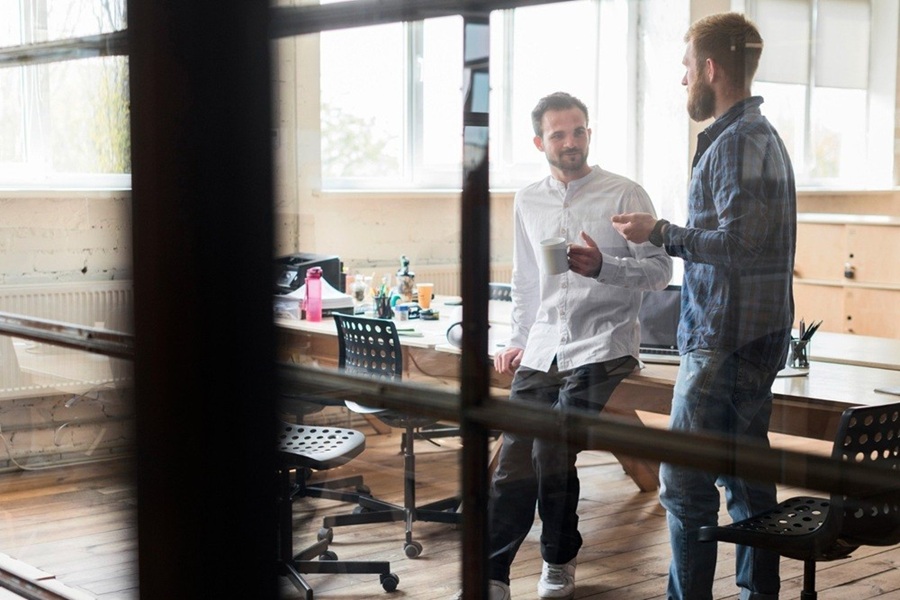
Welcome to coworking 2.0
Don’t call it a comeback: Coworking receives a hybrid work makeover
AMID ALL THE office-space politics post-pandemic, the coworking space — all the rage back in the 2010s — had largely fallen by the wayside. WeWork, for instance, was forced into bankruptcy after the co-working space market experienced a “remarkable collapse,” per The Wall Street Journal.
Click here to view this article in the London Inc. Worklife newsletter
But coworking spaces are reportedly making a comeback. “As companies adopt a mix of office and remote work, coworking is once again one of the fastest-growing segments of the office market,” reported WSJ’s Peter Grant. “Coworking space in the U.S. totals 158.3 million square feet in nearly 8,800 locations. That is still down considerably from the years before the pandemic. But according to data firm Yardi, that number is up from 115.6 million in about 5,800 locations three years ago.”
Story Continues Below
Coworking 2.0, Grant observed, is less dominated by behemoths like WeWork, and more by single-site operators, whose growth rate has doubled the large players. Locally, there are several formal co-working spaces, including Innovation Works on King Street and Regus operating out of the London City Centre, plus a multitude of businesses offering up excess space on a short-term basis.
One of the drivers in the re-rise of coworking environments comes via large corporations aiming to hit RTO goals. Companies like T-Mobile and Allstate, though they are looking to see their workers back in office, are also looking to manage their real estate costs.
“The transition from taxi to Uber is what’s happening from traditional office space to flexible office space right now that all your big players are starting to use it,” said Jason Anderson, president of Vast Coworking.
For others, leaning on coworking spaces has helped them have people back in office while accommodating the more distributed workforces that developed post-Covid.
Story Continues Below
Today’s coworking spaces are also being noted for their luxury, with more attention being paid to the office experience (something we’ve seen in non-coworking spaces as well). In New York, one new coworking space, called Industrious Reserve, is taking that to the extreme — with pre-video call grooming services, marble interiors and regular caviar tastings.
“What we observe in our business is that people want a private club experience, but they also want their own office,” said the company’s president Anna Squires Levine. “I had a private equity executive tell me, ‘This is the product I’ve been waiting for. I do not want to sign my own 10-year lease. Why would I do that? Then I have to build it and manage it and figure out the Wi-Fi for 10 years. I want somewhere I can show up and feel like a boss.’”  Kieran Delamont