
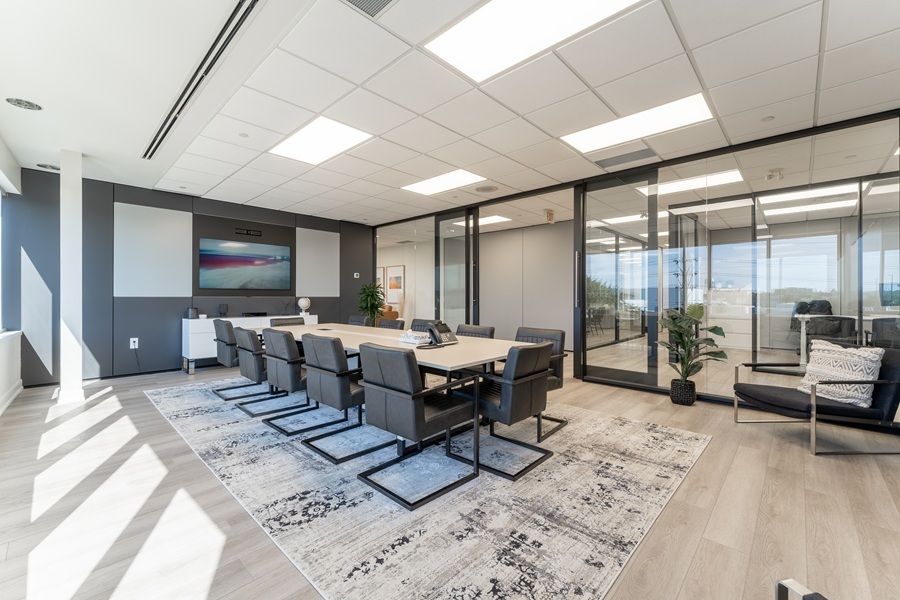
Customization at scale
Futureproofing for changing demands of employees and clients, an innovative approach to commercial spaces creates adaptable interiors that be reconfigured as needs evolve
YOU INVITE QUESTIONS when you advertise that your business offers ‘solutions.’ Whether it’s deliberate obfuscation or rhetorical fancy, it piques curiosity and, often, lends the company a bit of gravitas. The attendant problems are, assuredly, complex and pressing; the work is mysterious and important.
Click here to view this story in magazine format
So, the first question for Verto360 was simple: what are the solutions? Do you design? Are you builders? Installers? Interior designers?
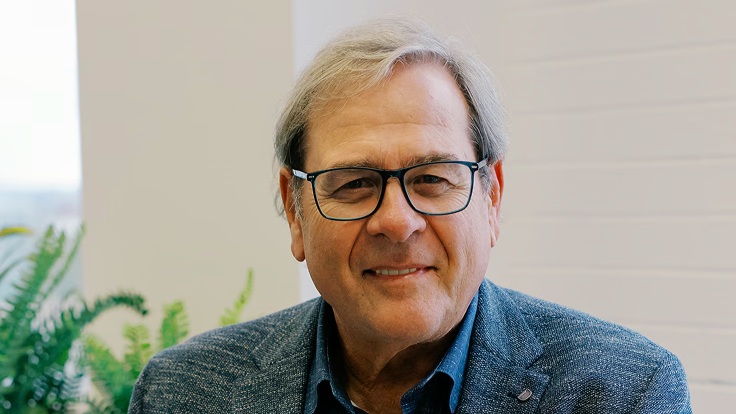
Andrew Lutowicz laughs. “It’s all of those things, and none of those things, all at the same time,” says the Verto360 president. “And more, depending on the stage of the project.”
“We enable our clients to build workspaces that not only meet today’s needs but are also prepared for tomorrow’s challenges” —Andrew Lutowicz
What they do do, he says, is take a given set of designs for a commercial interior space and bring it to fruition using prefabricated components built by their manufacturing partner, DIRTT Environmental Solutions of Calgary, Alberta. To the problem of, “We need to redesign our office, but the logistics are such a nightmare,” Verto360 delivers an answer in the form of custom interiors made from modular, prefabricated components.
“The architects and the interior designers design the office of today, or the hospital of today,” Lutowicz explains. “What we do is take that design and interpret it, using our software to provide a prefabricated solution.”
Lutowicz and Verto360’s senior project manager, Ruvim Matveev, talk a surprising amount about software for a company that is in the physical renovations space. But that software, called ICE (“because it melts into all different softwares,” says Matveev), is the secret sauce that brings this business model to life. In simple terms, the software ingests blueprints and generates a digital twin of a space, which Verto360 then uses to workshop changes and specifics with the client, designer and architect before outputting manufacturing specifics back to DIRTT.
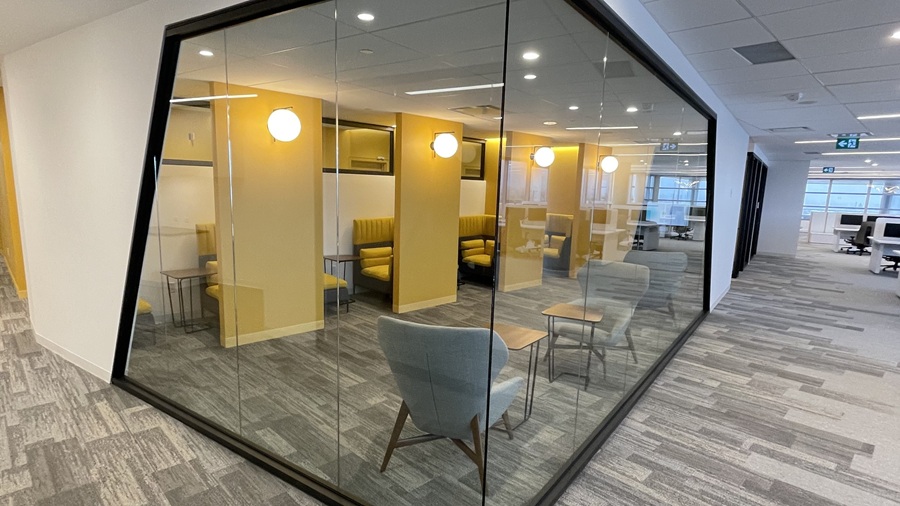
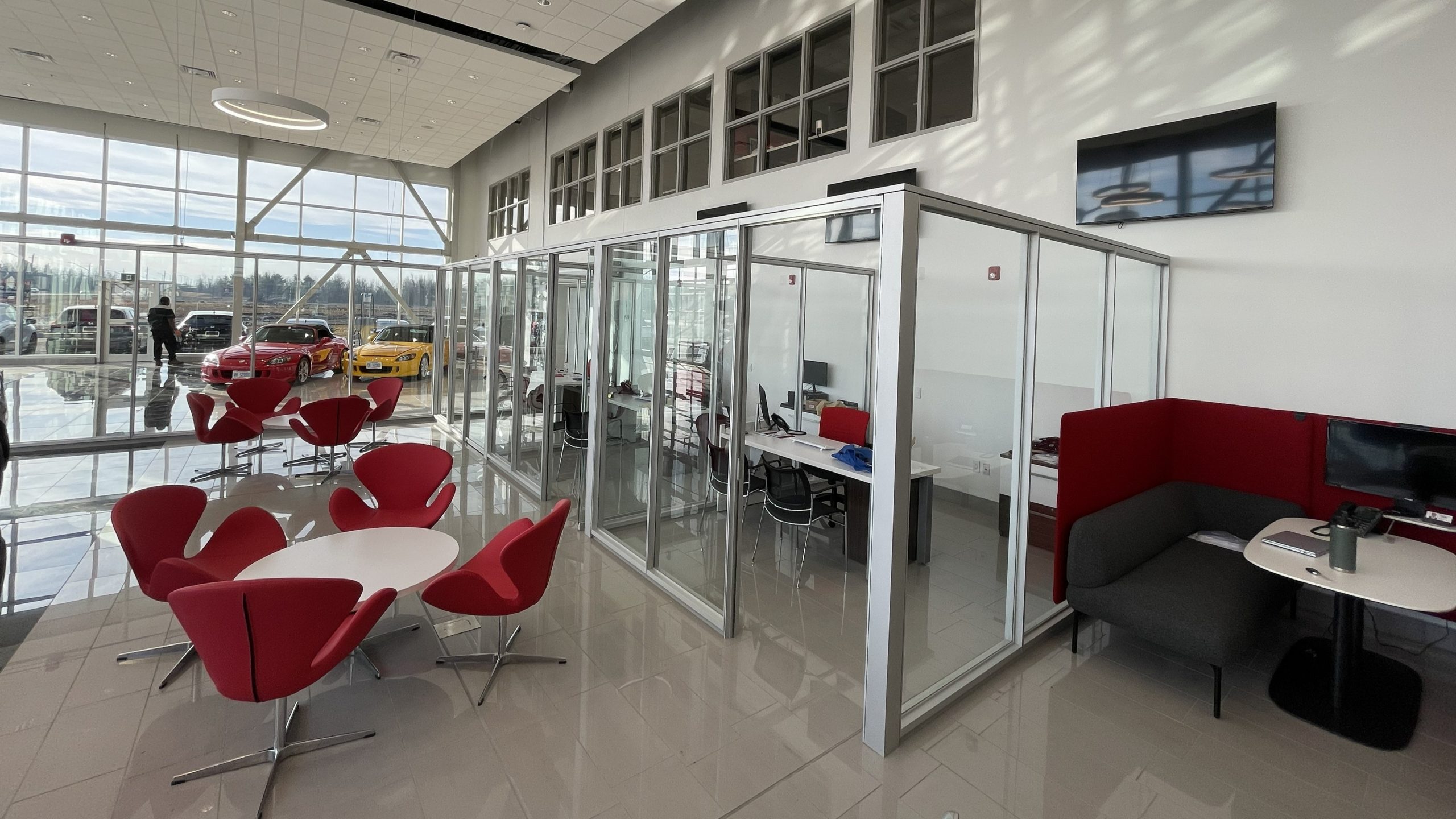

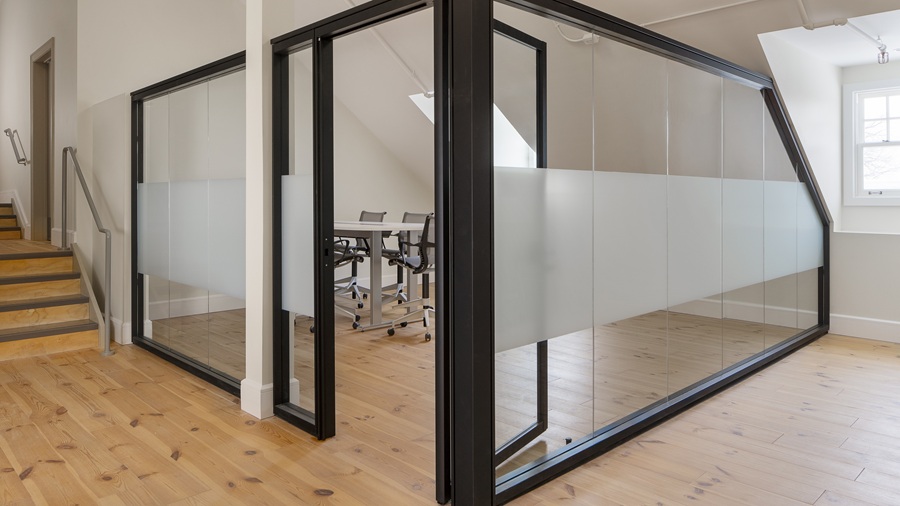
“Think of the efficiency of having one software platform, from the early design phase right to completion,” Lutowicz says. “You never have to re-enter that data anywhere — when you re-enter data, that’s where mistakes and glitches happen.”
Lutowicz says the division of labour between the two companies allows them to work quickly: two to three weeks for manufacturing, one week for shipping and on-site installations Lutowicz says takes “less than half the time it would take to build conventionally.” And Verto360 offers full scalability, from large commercial and institutional projects to smaller corporate offices and residential applications.
Verto360 finds itself in the business of corporate interiors at a time when commercial spaces are very much in the news, with companies having to think through what it is their workers need out of a space. Verto360 has a pitch for them: build something you can change. Much of the appeal that its product, and its process, brings to clients is it is faster than traditional builds and, because of the modular nature, are not all that hard to change in the future.
“After Covid, we’ve seen a lot of change where design is more flexible. It has to be a flexible space to be able to adapt,” Matveev says.
As businesses grow and adapt to market shifts, the need for flexible commercial spaces has become more critical than ever, says Lutowicz. Whether you’re looking to create a retail store, an office or a healthcare facility, modular commercial spaces provide the flexibility necessary to evolve without being constrained by a rigid layout or fixed purpose.
“For years, when we would present what we do, people would say, ‘Yeah, when we build something, it stays that way for 50 years, we never change it,’” he recalls. “And my response was always, ‘Yeah, because you couldn’t change it. Of course you didn’t change it.”
In essence, the mission for Verto360 is to make a space as dynamic and adaptable as the market conditions and technologies it may need to accommodate. “We enable our clients to build workspaces that not only meet today’s needs but are also prepared for tomorrow’s challenges,” says Lutowicz. “Once our clients experience this level of transformation, they never want to go back.”  Kieran Delamont