

How to build and design the perfect pergola for your deck
Deck pergolas improve shade, weather protection and increase outdoor usability
PERGOLAS IMPROVE DECK usability by creating shaded areas, providing rain protection, and providing extra outdoor space. The deck installation process requires accurate measurements, and lasting materials. Proper design improves durability and reduces maintenance.
Planning a Deck Pergola
Before installation, evaluate the deck structure. Pergola for deck adds vertical load and wind pressure, so weak or aging decks may need reinforcement.
Local permits may be required depending on the pergola size and attachment type. Building regulations often apply to permanent roof systems or large attached structures.
Match pergola measurements to deck dimensions. Ensure the pergola does not block stairs, doors, or walkways. Account for clearance around railings and seating areas during planning.
Key planning requirements:
- Verify deck load capacity.
- Check local permit regulations.
- Measure deck dimensions accurately.
- Consider wind and snow loads.
- Maintain access around the structure.
Incorrect planning reduces structural stability and increases installation costs.
Choosing the Right Material
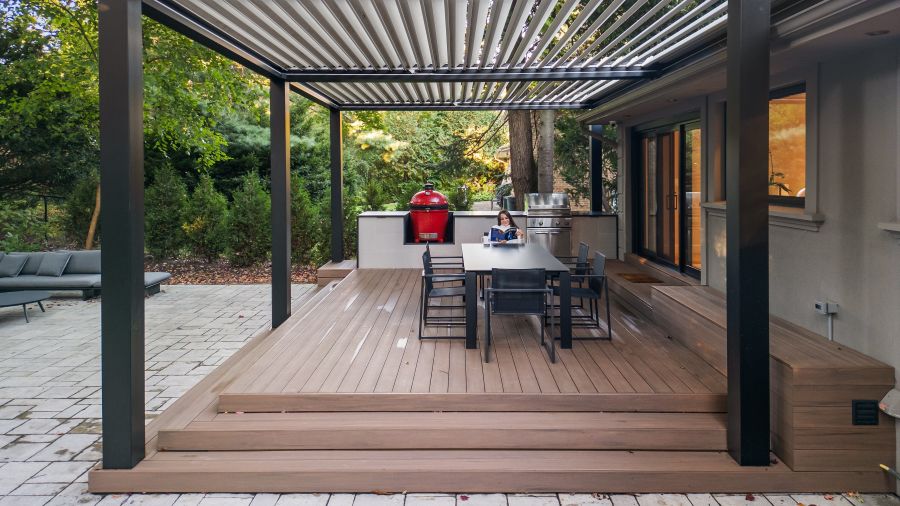
Aluminum is the most common material for deck pergolas. It is lightweight, corrosion-resistant, and suitable for outdoor use. The powder-coated aluminum protects against both UV radiation and moisture.
Wood pergolas require regular sealing because they are vulnerable to rot and cracking. Steel structures provide strength but their increased weight demands extra protection against rusting.
Aluminum systems support integrated features, which include operating lights, retractable roofs, and privacy screens. Lower maintenance requirements reduce long-term ownership costs.
Design Considerations
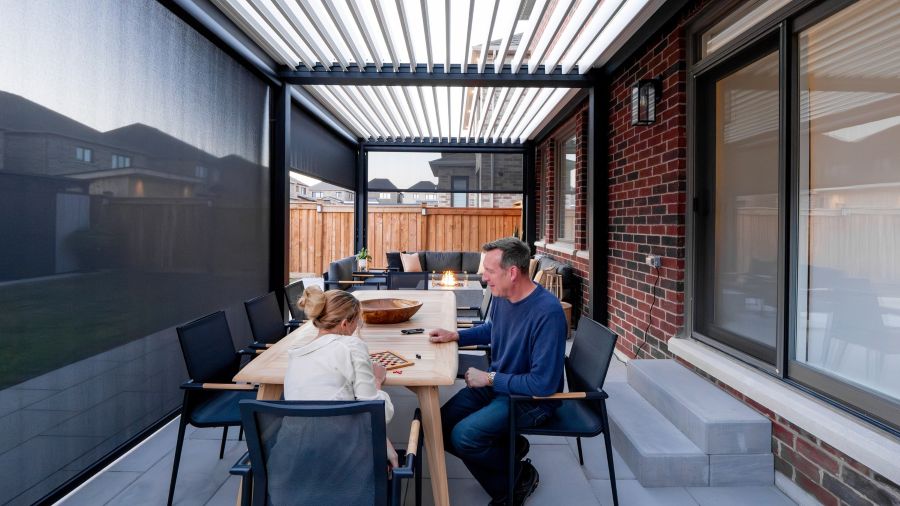
Match pergola dimensions to deck proportions. Oversized structures limit usable space, while small pergolas offer limited coverage. Height affects airflow and shade efficiency. Low structures restrict ventilation, while high roofs provide less concentrated shade.
Placement affects shade and comfort. South-facing installations usually require greater shade coverage during the summer months. Attached pergolas connected to the house often provide better stability than freestanding models.
Safety and Structural Integrity
Pergola posts should connect directly to the deck frame. Do not attach posts to deck boards, because deck boards cannot provide long-term stability. Anchor posts properly to improve wind resistance and reduce movement. Large spans may require reinforced beams or additional support posts. The snow load capacity is a critical factor in Canadian climates. The use of corrosion-resistant fasteners increases durability while reducing structural damage caused by moisture exposure. Regular inspections help identify to detect any loose connections and structural movement.
Enhancing Deck Functionality
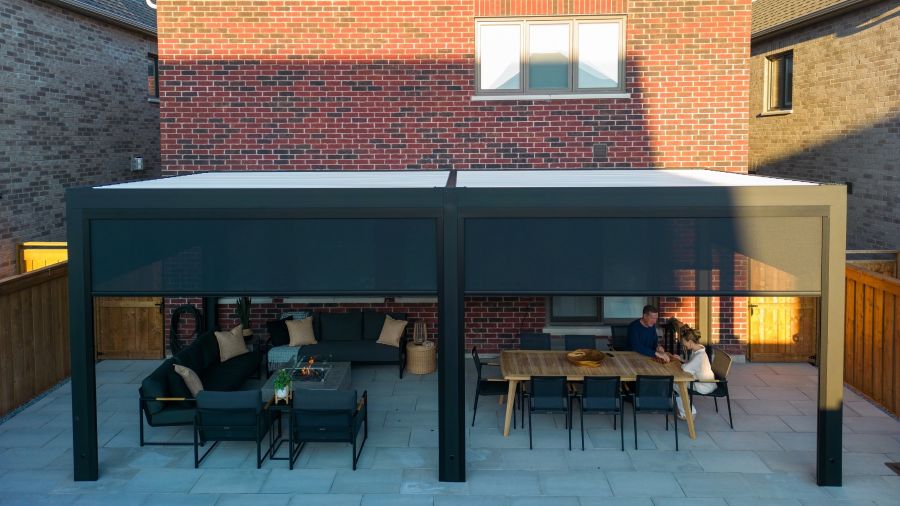
Pergolas make decks more usable by providing protected outdoor areas. Added features increase comfort and function.
Common upgrades include integrated LED lighting, retractable screens, privacy panels, and motorized roof systems.
These upgrades improve outdoor usability without major structural work.
Deck pergolas improve shade, weather protection, and increase outdoor usability. Long-term performance depends on proper planning, secure anchoring, and durable materials. For permanent residential use in modern deck construction, aluminum pergolas offer the most suitable option, as they require minimal maintenance, resist corrosion, and fit contemporary building styles.