Weekly Regional Business Intelligence
|
|
|
Written by Kieran Delamont, Associate Editor, London Inc.
|
|
|
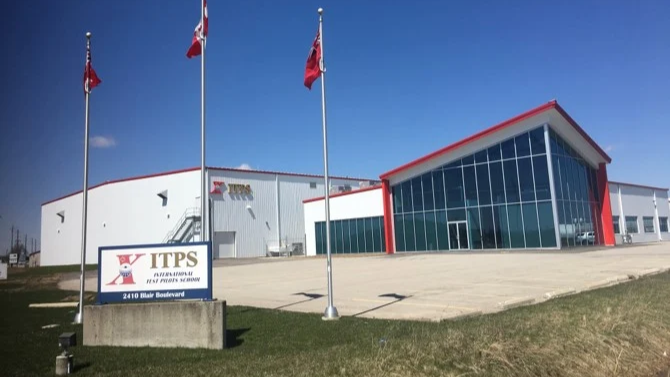
ITPS Canada purchases six new advanced jet trainers to support expansion of North Bay facility
London-based International Test Pilots School Canada (ITPS Canada) announced this week it is relocating some of its business to its North Bay facility, citing the need for more space to meet growing demand. According to company CEO David Lohse, ITPS Canada has signed a contract to purchase six new Leonardo M-346 T Block 20 advanced jet trainers, with options for six additional aircraft, which will be located at the company’s International Tactical Training Centre base in North Bay. “We are experiencing significant interest from our partners and this gives us room to grow,” Lohse told The London Free Press, adding that “London has been our home for 25 years and will continue to be our headquarters.” The North Bay operation is located on former NORAD base and the company said it will take on more “NATO and allied tactical fighter pilot training.” The new fighter jets purchased by ITPS are Italian-made fighter jets, which are expected to be delivered starting in 2029. “The M-346 is an exceptionally capable advanced jet trainer that aligns closely with the operational requirements of modern fighter pilot training,” said Lohse. “The aircraft’s performance, digital flight control system and advanced training architecture make it an ideal platform to support the next phase of growth for the international tactical training centre.” He also told CTV News that “the graduates from our lead-in fighter training courses will then go on to a frontline fighter, be it F-35, F-16 or F-18.”
The upshot:. Despite all the grumbling from the Pentagon, Canada seems keen to play ball with the global defence industry, and companies like ITPS seem poised to benefit from that level of demand. “Allied nations are re-evaluating their defence commitments and there is collectively a renewed focus on Canada as a reliable long-term partner,” Lohse said. ITPS has grown at a strong clip since last year, when it had about 95 staff; it now expects the London facility alone to grow to 150 employees, with 60 more located in North Bay. Canada has pledged more than $81 billion in new defence spending over five years, pushing its military spending to five per cent of GDP by 2035. ITPS, which trains NATO and other allied pilots, is positioned nicely in front of that wave. Officials in North Bay also praised the announcement. “Excellent news for North Bay,” said MP Pauline Rochefort. MPP Vic Fedeli said that the investment “will enable ITPS Canada’s ability to train more fighter pilots from its North Bay facility and support the rapidly evolving needs of our air force.”
Read more: London Free Press | CTV News
|
|
|
Drewlo betting big on St. Thomas
London-based Drewlo Holdings wants to drop up to 2,000 rental units onto a former rail terminal site in east St. Thomas as the city races to boost its housing stock for an expected expansion of its industrial workforce. The firm is proposing six large apartment buildings on eight hectares at Wilson Avenue and Elm Street, according to Drewlo planner Carrie O’Brien. The land is a heavily contaminated brownfield the company has been remediating, and in a St. Thomas Economic Development video said Drewlo aims to break ground on the first building later this year or in early 2027. “St. Thomas is obviously an ideal market in terms of location,” O’Brien said. Mayor Joe Preston, a longtime brownfield booster, welcomed a plan for land that “otherwise would sit forever,” and thanked Drewlo “for coming in, taking the effort to … come up with ways to use it for residential properties in St. Thomas at a time when we sure need the housing.”
The upshot: Drewlo first eyed St. Thomas after Amazon’s Talbotville announcement, and bought the land a couple years ago, but “the PowerCo announcement made it even better,” O’Brien said. The $7-billion VW battery plant is supposed to open in 2027 with 3,000 direct jobs. The housing bet riding on PowerCo is getting crowded, though. Central Elgin, for one, is separately floating a 3,500-home redevelopment of the old psychiatric hospital grounds, plus there’s a healthy dose of infill development and smaller projects. All of which is great for housing stock, provided PowerCo doesn’t go the way of the Honda EV plant in Alliston or the GM CAMI plant in Ingersoll. Either way, though, the former rail terminal site would have been expensive for St. Thomas to clean up on its own, and many a brownfield project in other jurisdictions has stalled over negotiations regarding who should pay the remediation costs, so the fact that it’s being addressed and in progress means Drewlo already has considerable skin in the game. The factor to watch for will be how quickly the remediation work can progress, and whether this project will be able to break ground before the end of the year.
Read more: London Free Press
|
|
|
Western to host new, shared digital research infrastructure
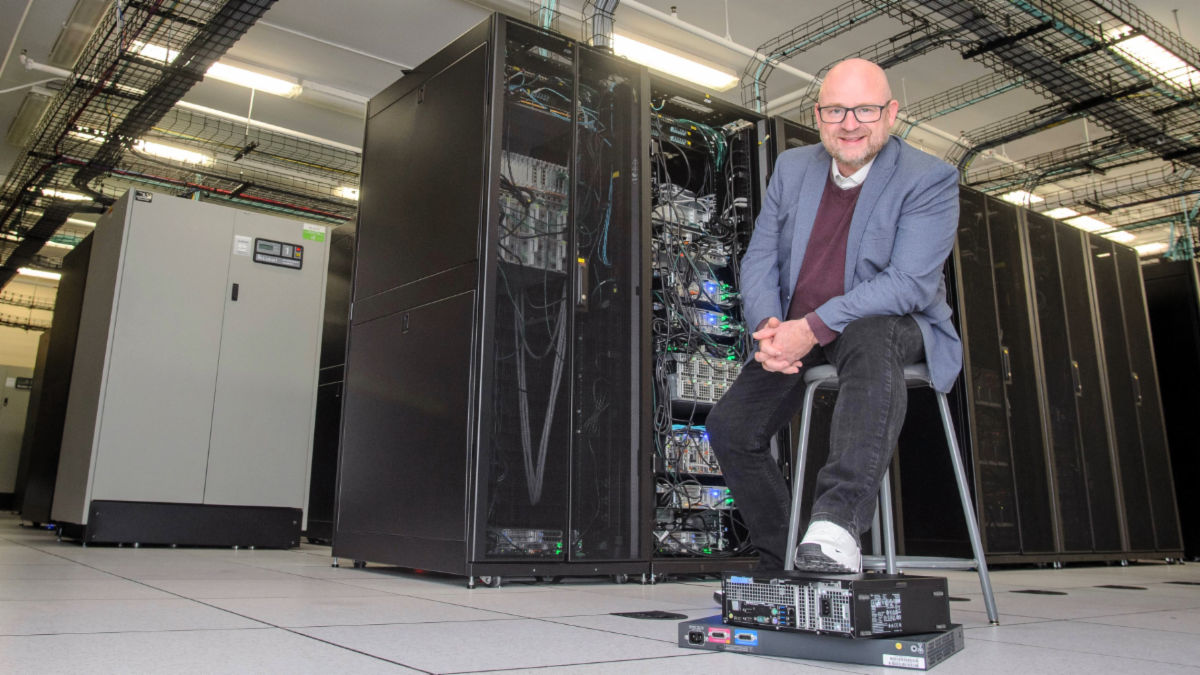
Western is one of seven Canadian universities that will host equipment for the Distributed Storage and Compute Grid, a national research infrastructure pilot led by the Digital Research Alliance of Canada, the school announced this week. The program will see the school hosting digital infrastructure (servers, cloud storage, etc.) on campus, part of a $15-million investment into digital infrastructure funded through Ottawa’s $2-billion Canadian Sovereign AI Compute Strategy. “We want to empower and enable the research community by providing the tools they need to change the world,” said Jason Oliver (pictured), Western’s chief technology officer. “This is another step in driving that forward.” The other six sites are the Universities of Alberta and Calgary, McGill, Red Deer Polytechnic, and the Universites de Sherbrooke and Laval. Hosting institutions get priority access to up to 30 per cent of the system’s capacity, which Western says will help its researchers scale up AI work and keep their data within Canadian borders. Penny Pexman, Western’s VP of research, framed it as part of the school’s efforts to keep up in a competitive research context. “To remain globally competitive, we need to work together across labs, across institutions and across sectors,” she said. “Large-scale platforms like these allow us to develop, share and secure the cutting-edge digital tools that underpin and drive next-generation research at Western and across Canada.”
The upshot: This announcement is apiece with something we’re likely going to hear a lot about over the next few years: AI sovereignty. The federal government, with AI minister Evan Solomon as the figurehead for this project, is keen to develop more of the plumbing that new AI systems rely on to domestic sites. This announcement isn’t quite as flashy as the $42.5 million of federal money U of T got for a supercomputer in April, but it does put Western (a school which has for several years positioned itself as an AI-friendly research university) in the position of being the only research institution with priority access to this particular pool of compute in Ontario. For universities looking to experiment and do research with AI, it’s likely that we’ll see more of this kind of thing — bringing infrastructure in-house where possible to avoid reliance on mostly American cloud computing providers. “Canada’s research future depends on our ability to bring compute, data and people together into one connected national system,” said Michael Schull, CEO of the Digital Research Alliance of Canada. “By building new, nationally operated infrastructure that integrates storage and compute across multiple sites, we are giving researchers a secure and scalable foundation to manage, share and work with data wherever they are in the country.”
Read more: Western News | Alliance Canada
|
|
|
From the magazine: Waves of reinvention
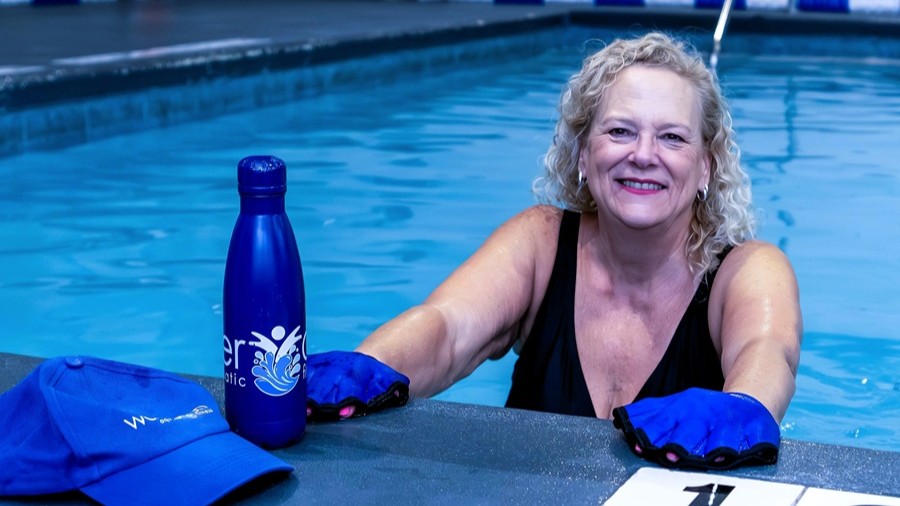
For Jill Ellis-Worthington, the water has always felt like home. After a successful career in publishing and communications, the lifelong swimmer and fitness enthusiast took an unexpected leap in her mid-60s, launching WaterOn Aquatic Fitness — a boutique business redefining what aqua fitness can be. Far from the stereotypes often associated with pool workouts, her small-group classes focus on strength, balance and functional movement in a fun, low-impact environment that keeps members coming back. Since opening in London in 2024, WaterOn has built a devoted following, proving that it’s never too late to dive into a new passion — especially one that helps others move, feel and live better.
Read more: London Inc.
|
|
|
Aduro Clean Technologies graduates to TSX
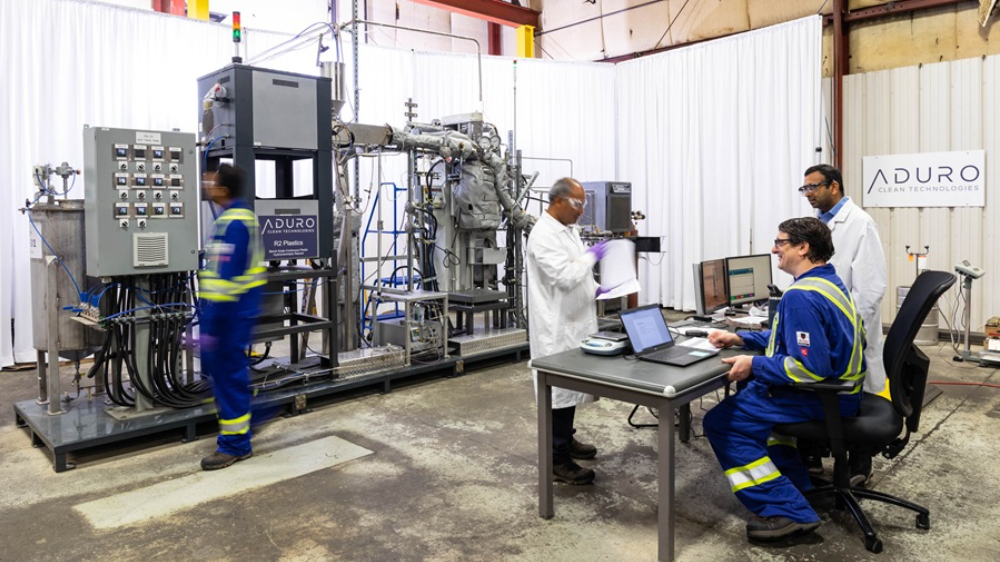
London clean-tech company Aduro Clean Technologies began trading on the Toronto Stock Exchange on Tuesday, after receiving final approval to list on Canada’s senior stock exchange. The move is a graduation rather than an IPO — Aduro has traded publicly since 2020 on the smaller Canadian Securities Exchange, plus the Nasdaq and the Frankfurt Stock Exchanges. Aduro had been part of the CSE25 Index, a benchmark of the exchange’s 25 largest names by market cap. CEO Ofer Vicus, in a statement, framed the move around obtaining greater access to capital: “The TSX listing provides a senior Canadian market platform that better aligns with Aduro’s current stage of development and international investor profile,” he said. “The commencement of trading on the Toronto Stock Exchange marks an important step in the capital markets development of Aduro.” The company’s recent market cap on Nasdaq has been hovering in the USD$450 million range.
The upshot: Aduro’s core business model hasn’t changed — it’s the company’s patented Hydrochemolytic technology, a water-based chemical recycling process that breaks down hard-to-recycle plastics into feedstock for new plastics or fuels (we covered Aduro back in 2025). The company has definitely made steps toward greater commercialization in the past six months, moving from the pilot plant phase towards a fully-fledged “demonstration plant.” That demonstration plant is being built at the Chemelot Industrial Park in the Netherlands, not in Canada, however, with the European chosen in late January after a global search. So, while London gets to keep the R&D and the pilot plant, the commercial scale-up happens in Europe, where packaging regulations and recycling mandates are tighter and the commercial case is more obvious. The company also recently brought in Scott Smith, a petroleum industry vet, to help guide its commercialization efforts.
Read more: Aduro Clean Technology | Sustainable Biz Canada
|
|
|
Agri-food summit highlights regional resources and infrastructure
The Grove agri-food and ag-tech incubator at Western Fair District played host to the second annual Southwest Food Summit on Tuesday, an industry meet-up for the agri-food sector that drew more than 250 entrepreneurs, industry types and support agencies. As attendees heard, the return of this event reflected the momentum of the region’s food manufacturing sector, which according to Kapil Lakhotia of the London Economic Development Corp., now boasts more than 150 businesses employing over 10,000 people. The summit’s keynote came from Emily O’Brien of Comeback Snacks, a popcorn company she founded after serving a federal prison sentence. In addition to serving as a platform for industry networking and discovery, the event was also meant to help promote the London region as a partner for new agri-food ventures. “There’s not been another place I’ve found in Ontario that would be better than London, and we’ve done our research,” said Victor Courarie-Delage, co-owner of chickpea snack manufacturer Peacasa (pictured, right, with Eye Candy owner Amanda DeVries), speaking with The London Free Press. The company, which operates out of The Grove, recently surpassed $1 million in annual sales and is launching in Walmart this summer, as well as doing Costco roadshows. “I’m sure there are other places investing as well,” noted Courarie-Delage, “but we have really enjoyed it here and have had a ton of support to help us get to where we are today.”
The upshot: When this event launched last year, it wasn’t exactly an unbreakable code as to what was going on: the tariff regime down south was upending business plans for companies that, like many in the agri-food sector, were oriented around eventual sales into the U.S.; priority number one for the sector became a pivot to more domestic and international growth. “Many businesses would get their start here in Southern Ontario, and then they would immediately turn to the U.S. market; they wouldn’t even consider expanding nationally,” Steve Pellarin of the London Small Business Centre told the Free Press. “But when the tariffs began, we had a number of businesses that were in the process of trying to enter the U.S. market, and immediately then had to pivot.” Peacasa is one of them — Courarie-Delage said the company had been planning a U.S. expansion last year, but those plans are now on hold. “Our job here is to help companies that are in the small- and medium-sized space that may not have their own resources or bandwidth to explore new markets to help them connect with export channels outside of North America,” added Lakhotia. “As we know, our relationship with the U.S. is evolving, and we don’t know the future of that relationship, so with that spirit in mind, we’re helping companies open doors outside of North America.”
Read more: London Free Press | CTV News London
|
|
|
Dispatch: May 29, 2026
A summary of recent business appointments and announcements, plus event listings for the upcoming week.
View listings here
|
|
|
|
|