
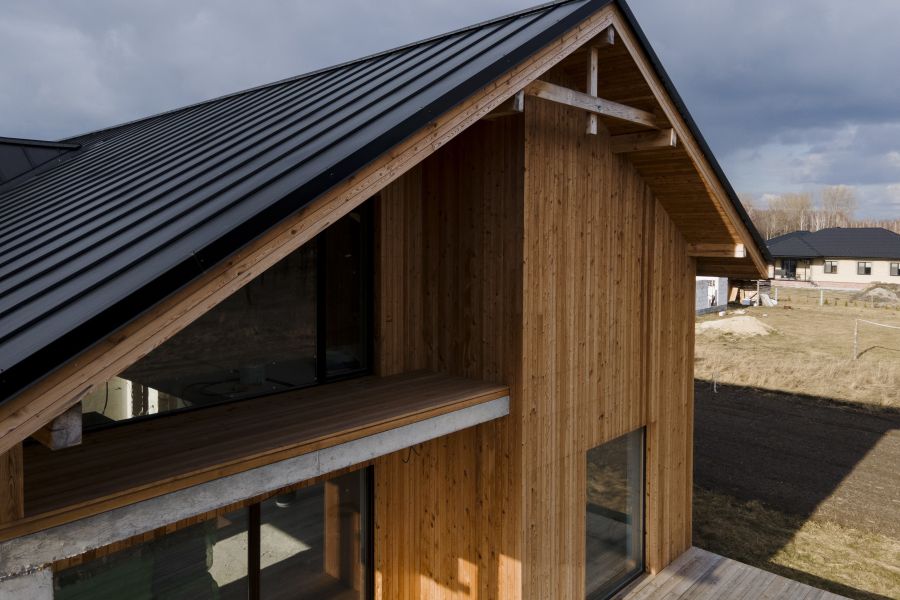
Why cedar siding Is becoming a smart property investment amid rising extreme-weather costs
Beautiful, durable and dimensionally stable, cedar is ideal for external cladding applications
TWO DECADES AGO, Canadian insurers seldom paid out more than $500 million in a single year for severe-weather damage. That figure is now routinely exceeded within a single storm season, and property owners across Ontario are starting to feel the effects in their premiums, their coverage terms, and the questions their insurers ask before renewal. According to the Insurance Bureau of Canada, insured losses from severe weather totalled $37 billion between 2016 and 2025, nearly triple the $14 billion recorded across the previous decade. 2024 alone produced a record $9.4 billion in claims, driven in part by a single Calgary hailstorm that, once the final tally was in, ranked as the second-costliest insured disaster in Canadian history.
For business owners and landlords, that shift is turning exterior materials from a cosmetic decision into a risk-management one. Underwriters increasingly ask what a building is clad in, how old that cladding is, and what condition it’s in before they’ll confirm terms. Alberta has effectively become the country’s stress-test for exterior materials, and the lessons emerging there are relevant well beyond the province. Family Siding, a contractor working across Alberta, British Columbia and Saskatchewan, has watched this play out first-hand on its Calgary jobs (https://familysiding.com/locations/siding-calgary/), where hail, Chinook freeze-thaw cycles and intense UV exposure combine to punish cladding faster than almost anywhere else in the country.
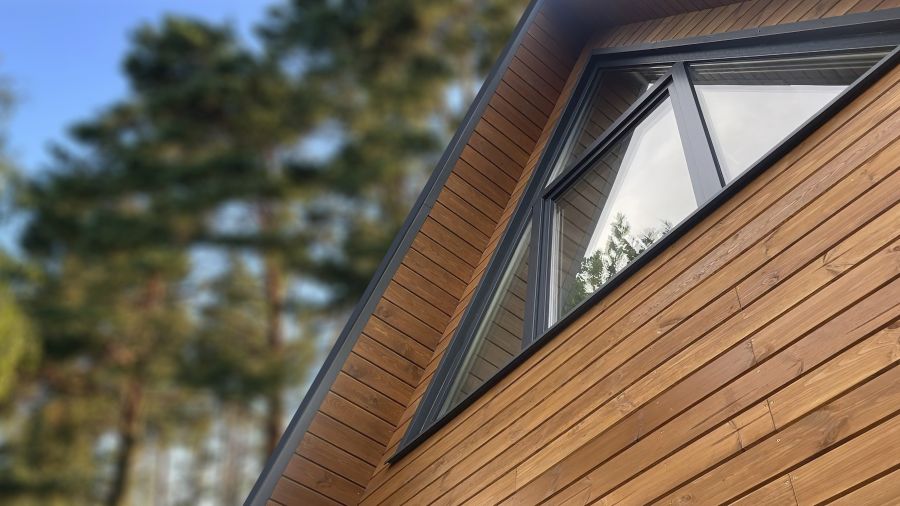
Why Exterior Material Is Now a Risk-Management Line Item
Insurers price risk on the information available to them, and ageing or poorly maintained cladding is a visible proxy for deferred maintenance elsewhere in a building. A homeowner or landlord replacing siding that is approaching, or past, its expected service life isn’t just improving kerb appeal; they’re removing a data point insurers use to justify higher premiums or more restrictive terms.
That reasoning extends to material choice itself. Products with long, well-documented service lives reduce the frequency of full exterior replacement, which matters both for capital planning and for the narrative a property presents to an underwriter over a 20- or 30-year ownership horizon.
Where Cedar Fits Into That Calculation
Western red cedar is not a new material, but its performance profile is worth revisiting in light of current conditions. Properly installed and maintained, cedar siding typically lasts 30 to 50 years, considerably longer than budget vinyl and comparable to many premium engineered products. It carries natural resistance to rot, moisture damage and many wood-boring pests, and its cellular structure allows it to expand and contract through freeze-thaw cycles more forgivingly than several rigid alternatives, a meaningful advantage in a climate that swings from -30°C to +15°C within days during a Chinook.
Cedar also offers a natural degree of thermal insulation, which supports energy efficiency year-round, and it can be specified with a pressure-treated fire-retardant option for properties in wildfire interface zones, an increasingly relevant consideration given how many of the last decade’s largest insured-loss events in Canada were wildfire-driven.
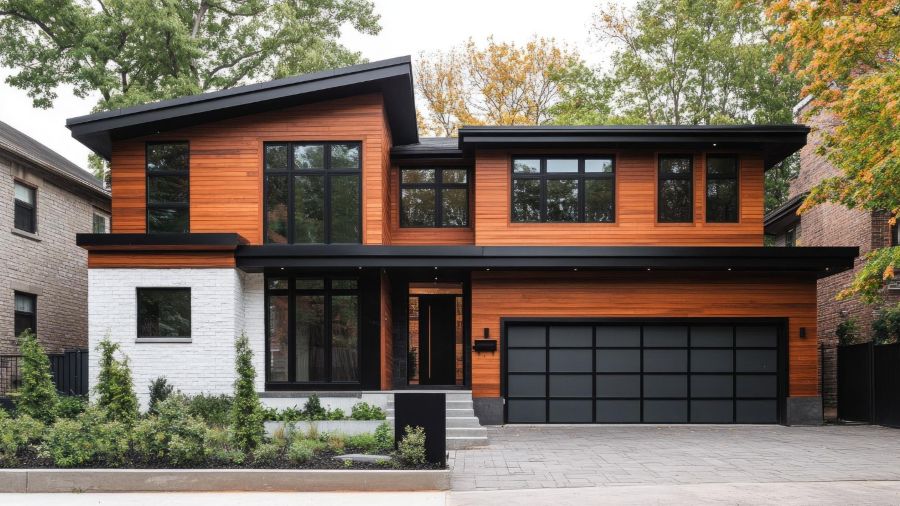
The Trade-Offs Worth Knowing
None of this makes cedar the automatic choice. It sits above vinyl and most engineered wood products on upfront cost, and it is not a maintenance-free material: owners should plan for periodic cleaning, inspection, and a re-stain cycle roughly every three to five years to preserve both its appearance and its protective qualities. It is also combustible unless the fire-retardant treatment is specified, a point worth raising directly with an insurer rather than assuming it’s covered by the material’s natural properties alone.
For owners weighing cedar against composite or fibre-cement alternatives, the honest comparison is total cost of ownership rather than sticker price. A material that needs replacing twice as often erodes any upfront saving well within a single ownership cycle, particularly once the disruption and labour costs of a second full re-clad are factored in.
There’s also a portfolio-level version of this decision that larger owners and property managers should weigh. Standardising on a durable, well-understood cladding across a portfolio simplifies maintenance budgeting, gives asset managers a consistent baseline when negotiating renewals, and avoids the awkward position of explaining to an underwriter why one building in a portfolio has been re-clad twice while a comparable one, finished in a longer-lived material, hasn’t needed attention at all.
What Calgary’s Experience Signals for Other Markets
Alberta’s exposure to hail and rapid temperature swings has made it something of a proving ground for exterior materials in Canada, and contractors working there have had to get precise about which products hold up and which don’t. Family Siding, which has completed cedar installations across the province, notes that the material’s biggest test in Alberta isn’t impact resistance so much as its ability to handle repeated thermal cycling without cracking, cupping or losing its seal, a demand that mirrors what commercial and residential exteriors are increasingly facing in Ontario as storm severity and frequency both trend upward.
The broader pattern is one Ontario property owners would do well to note: markets that have already absorbed several years of intensifying severe weather aren’t seeing a rush toward the cheapest possible cladding. They’re seeing a shift toward materials with well-understood, long-dated performance records, purchased with total lifecycle cost, not just installation cost, in mind.
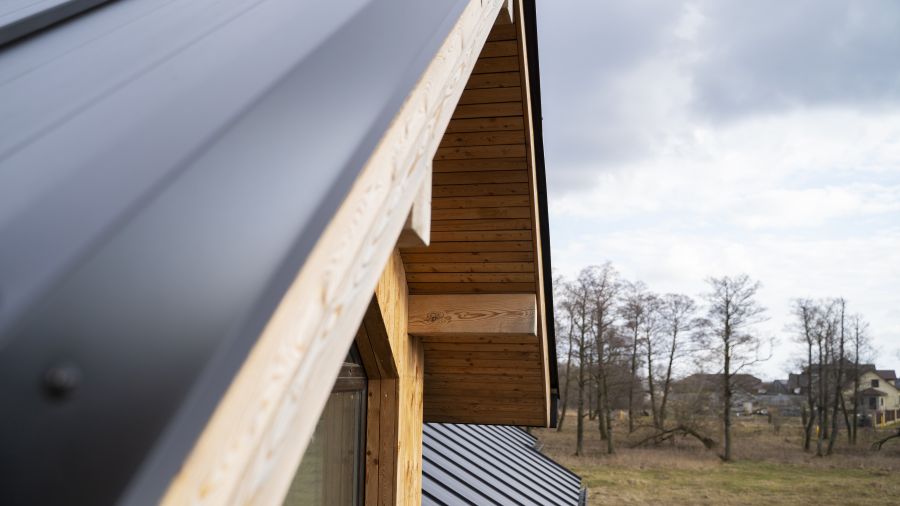
The Practical Takeaway for Property Owners
None of this means every building needs cedar, or that any single material solves the underlying problem of rising climate-driven risk. But it does mean the calculus around exterior upgrades has changed. A re-cladding decision made purely on upfront price, without factoring in service life, thermal performance and how the material reads to an insurer, is increasingly a false economy.
For owners evaluating options, the more useful question isn’t “what’s the cheapest siding available” but “what material gets me the longest interval before I have to make this decision again, at the lowest total cost, while giving my insurer the fewest reasons to push back at renewal.” Family Siding’s cedar siding page (https://familysiding.com/services/cedar-siding/) sets out current material costs, profile options and maintenance expectations in detail for owners who want to run that comparison against their own numbers before committing.