
Your car knows more about you than you think
The next time you get in your car, keep in mind there may be another eyewitness along for the ride: your car’s memory
WHEN YOU GET into your car, connect your phone via Bluetooth, enter your destination into the GPS and take off, you probably don’t give it much thought. Perhaps you place a hands-free call, switch songs on the radio or accelerate a little too quickly when the light turns yellow.
For you, it’s simply a routine drive.
For your car, it can be a potential deluge of data.
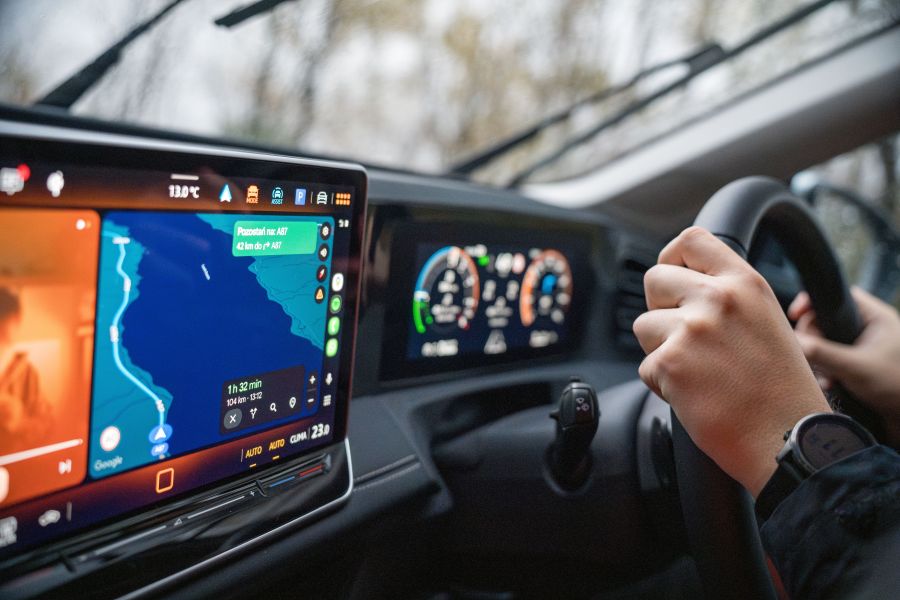
Modern cars are essentially high-performance computers on wheels. They can capture information about how you drive, including your braking, acceleration and steering behaviour. Connected vehicles can even track your movements, driving patterns and information from phones paired with the infotainment system.
According to the Office of the Privacy Commissioner of Canada, smart cars can be considered “smartphones on wheels” because of the amount of information they can collect about drivers and passengers.
Most drivers don’t spend much time thinking about the data being captured by their vehicles. Police officers, insurance companies, collision investigators and criminal lawyers, however, are paying closer attention.
The Black Box Under Your Dashboard
One of the most common forms of digital vehicle evidence comes from Event Data Recorders, or EDRs. These devices are sometimes referred to as a car’s “black box.”
Unlike the black boxes on airplanes, EDRs typically do not capture conversations or hours of travel. In most passenger vehicles, the EDR is connected to the airbag system and records a short period surrounding a collision.
Yet those few seconds can reveal a great deal.
In 2024, an Ontario Court of Appeal ruling focused on a collision that occurred at Highway 50 and Queen Street in Brampton on March 18, 2018. A Lexus collided with a Toyota Corolla that was making a left-hand turn through an intersection, seriously injuring the Corolla’s driver.
After the collision, police accessed the Lexus’s EDR and used the information as evidence against the driver. According to the court, the Lexus was travelling at 120 km/h approximately 4.75 seconds before the collision. Less than one second before impact, its speed had increased to 130 km/h. The speed limit was 80 km/h.
The case, R. v. Attard, eventually reached the Ontario Court of Appeal because of a dispute over police access to the EDR data. The court held that once the vehicle had been lawfully seized as evidence of an offence, the driver did not have a reasonable expectation of privacy in the EDR data.
Criminal defence lawyer Akash Dhillon of A. Dhillon Law says cases like this highlight the changing nature of evidence in driving cases.
“People often think a dangerous driving or impaired driving case will come down to what a police officer or witness says happened. Increasingly, the vehicle itself can provide another version of events. Speed, braking and acceleration data can become an important part of the evidence, so we have to look closely at how that information was collected and what it actually proves.”
A Lamborghini Provides Another Account
Another Ontario case demonstrates just how precise an electronic witness can be.
In May 2021, a Lamborghini crashed into parked vehicles and a TTC streetcar on Queen Street East in Toronto while attempting to pass the streetcar. Reports indicated that several vehicles were involved and that a passenger suffered serious injuries.
Information revealed during later court proceedings provided details that witnesses at the scene could not have known.
The Lamborghini’s Airbag Control Module had automatically recorded five seconds of information before impact. According to the court’s findings, the vehicle accelerated from 52 km/h to 112 km/h while attempting to pass a streetcar travelling at approximately 20 km/h on a road with a 40 km/h speed limit. The data also showed no indication of braking before impact.
Police were interested in more than the EDR. Investigators also sought information stored within the Lamborghini’s infotainment system.
They recovered only limited usable information, but the court heard evidence that infotainment systems can potentially store GPS information, vehicle performance data and video.
That distinction is important. An EDR will normally record a narrow period surrounding a collision. An infotainment system can potentially contain much more.
Your Smartphone May Be Along for the Ride
Canada’s Privacy Commissioner has noted that when drivers connect smartphones to their vehicles, the infotainment system may gain access to contact lists, call logs, text messages and emails. Navigation systems can also store historical location information.
Consider how much data can accumulate during a typical trip. You might connect your phone, enter a destination, make a hands-free call, receive messages and drive past several cameras before you arrive.
Each piece of information may seem insignificant on its own. Together, they can create a detailed picture of a journey.
Dashcams Add Another Layer
An Ontario court considered a similar issue in 2024 in a dangerous driving case arising from a collision on the Don Valley Parkway.
Police seized the vehicle after the collision and later obtained a warrant authorizing them to examine its dashcam and EDR. The Ontario Court of Justice recognized that a dashcam can carry a privacy interest, but found that police had sufficient grounds to search it in that case.
There is some irony in this. Many drivers install dashcams to protect themselves if something goes wrong. The same camera can potentially preserve evidence of their own driving.
The Numbers Don’t Always Tell the Whole Story
Electronic evidence can appear definitive because it presents precise numbers showing speed, timing, braking and other vehicle information.
The reality can be more complicated.
A 2026 Ontario case involving a fatal bus collision in Mississauga provides a good example. The bus’s Engine Control Module, or ECM, showed continuous acceleration and appeared to indicate that there had been no braking until several seconds after impact.
At first glance, that appeared damaging.
The court also heard evidence that raised questions about the reliability of the ECM data and the mechanical condition of the bus. The vehicle had an extensive maintenance history, the braking system had not been properly preserved for later examination and the manufacturer itself cautioned against using that particular module for accident reconstruction.
Ultimately, the judge found that brake failure remained a reasonable possibility and acquitted the driver of dangerous driving causing death.
Criminal defence lawyer Rupin Bal of Rupin Bal Professional Corporation says cases like this show why digital evidence still needs to be examined as carefully as traditional evidence.
“Computer-generated data can appear very precise, but precision does not automatically make it conclusive. You still have to ask what the system was designed to record, whether the data is reliable and what else was happening with the vehicle. A number on a screen may be important evidence, but it rarely tells the entire story by itself.”
Your Car Has a Memory
Today’s vehicles can collect large amounts of information that would have been unavailable to investigators a generation ago.
Tomorrow’s vehicles will likely know even more.
Connected vehicles increasingly communicate with smartphones, cloud services, manufacturers and other systems. Cameras and driver-assistance technologies add more sensors. Electric vehicles and newer models rely heavily on software to monitor and report on how the vehicle is operating.
These technologies offer drivers tremendous convenience. They can also create remarkably detailed records when something goes wrong.
For most people, this doesn’t mean they should be suspicious of their car every time they start the engine. It does mean our view of a vehicle as a purely mechanical object is quickly becoming outdated.
Your car may know how fast you were travelling, when you applied the brakes and where you were headed. Depending on the vehicle and its settings, it may know which phone was connected and considerably more.
The next time you get behind the wheel, keep in mind that there may be another eyewitness along for the ride: your car’s memory.