
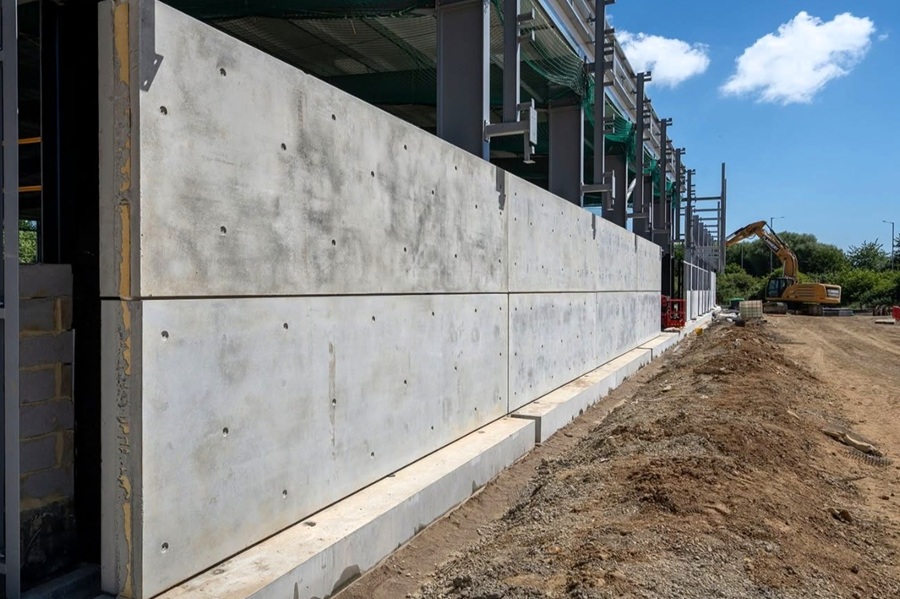
How precast concrete Is modernising the construction industry
How precast concrete is helping builders tackle some of the industry’s toughest challenges
THE UK CONSTRUCTION industry is facing a ‘perfect storm’ of pressures that feels anything but perfect. On the one hand, there are the ongoing pressures to meet heftier and heftier targets – often, to meet the demands of the UK housing shortage and the need for better, stronger infrastructure in increasingly populated areas – while at the same time reducing costs and making large scale projects as lean as possible.
On the other hand, there is a skills shortage that is constricting entire teams, making managing those large scale projects (and tight deadlines) practically impossible.

At the same time, the climate crisis is exacerbating the country’s already-volatile climate, creating just a few pockets of ‘ideal’ conditions between extreme high temperatures, extreme lows, prolonged rainy seasons and droughts.
It’s no wonder that the industry as a whole feels as though it’s under a heavy weight – but, thankfully, there are solutions that alleviate some of the Sisyphian struggle.
How Can Precast Concrete Help?
Most of us take concrete for granted in our day to day lives. Its simplicity and ubiquity mean that we barely think about it – unless, of course, we’re part of a construction team whose entire schedule is being held up by concrete that is attempting to cure during a cold, wet winter.
Concrete is a miraculous material. It’s strong, durable, and versatile, but in order for it to be any of those things, it has to be given space, time, and good conditions in order to cure.
On site, this is a big ask. It means working around large pours for weeks as they dry and harden – protecting them as much as possible from the elements, and constructing large moulds in-situ to create the versatile shapes any project requires.
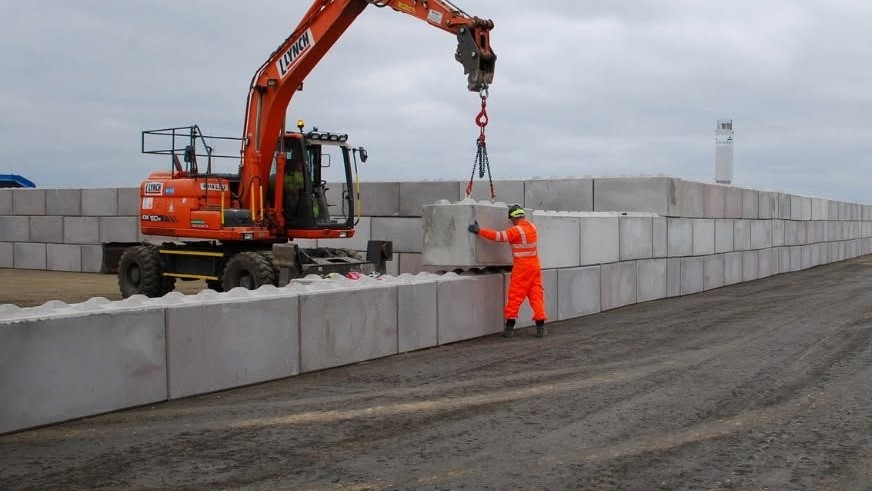
Off-site, all of this becomes so much simpler. Factory conditions offer the ideal environment for concrete to dry in: temperature controlled, dry, and free from constant traffic from workers and machinery that just can’t wait weeks to see to other areas of the job.
A precast concrete retaining wall can be formulated and poured at the design stage and be ready for installation precisely when the on-site team need it. It can be designed to lock into place with that slim margin for error that projects like this demand – a margin that is almost impossible to work within on site.
Since the engineering expertise is located off site, construction jobs can be far more cost-efficient, and retaining systems can be engineered with longevity and durability in mind – rather than constrained by the limitations of space and expertise on site.
This sort of end-to-end service is vital for the UK construction industry as targets continue to climb further out of reach, skills shortages continue to tie the hands of site managers, and the weather continues to create less-than-ideal conditions for concrete curing year-round. It is an element of construction that can feel predictable, consistent, and reliable.