Weekly Regional Business Intelligence
|
|
|
Written by Kieran Delamont, Associate Editor, London Inc.
|
|
|
St. Thomas anticipating another boom year even as VW slashes PowerCo spending
St. Thomas Mayor Joe Preston continues to whistle a triumphant tune, predicting a “banner year” for the city as work progresses on the PowerCo EV battery plant. “The construction of the largest industrial facility in Canada, at least, is something to brag about,” he told CTV News London last weekend. “The steel is going up now.” However, across the pond, there are darkening clouds gathering on the horizon. German press outlets reported late last year that the VW Group is slashing its overall investment in its PowerCo battery subsidiary, to below 10 million euros, and according to EV publication Electrive, VW is exploring external investors for PowerCo. “PowerCo’s losses for this year are once again higher than the previous year’s level,” wrote reporter Carla Westerheide. “The consistently high investment in PowerCo is no longer seen as indispensable within the group.”
The upshot: It’s probably not going to be enough to dampen Mayor Preston’s consistently good mood — after all, how many other Ontario mayors are on such a hot streak? — but it does seem that as long as there are questions hanging over the global EV market, there will be questions hanging over the PowerCo plant. But as Preston pointed out, it has changed the political economy of St. Thomas considerably; there are other next-gen materials investments being made in the form of the Vianode plant, and housing and commercial developments spinning off from that. All of that is high-level thinking though. The more immediate concerns for St. Thomas and the Central Elgin region are the water and infrastructure required to run the plants, and there might be good news in the wings on that front: MPP Rob Flack said that there will be “significant announcements” on infrastructure in the area coming soon.
Read more: CTV News London | Electrive
|
|
|
Parking lot housing plan gets tarred
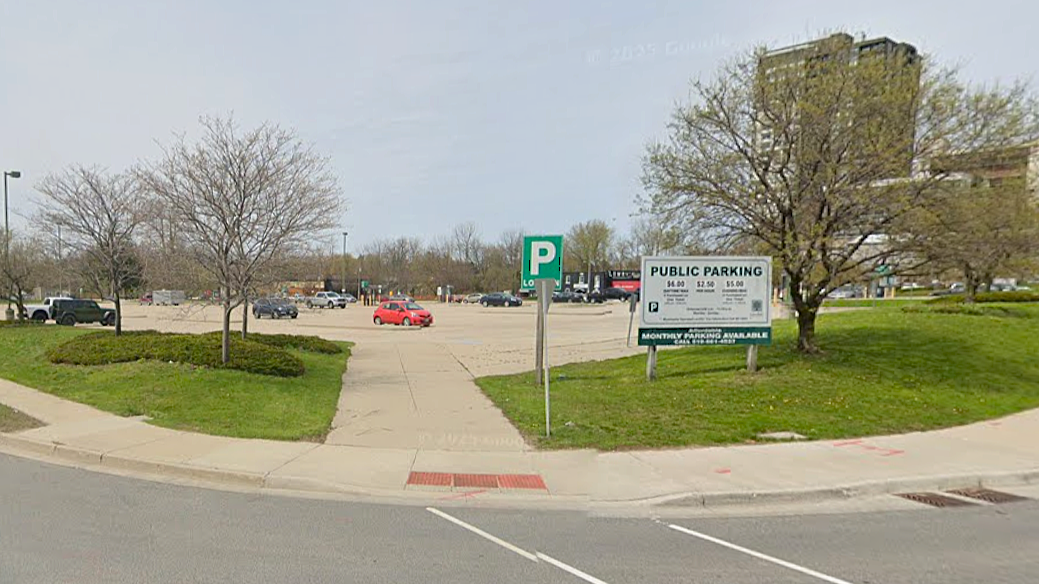
One of the mayor’s main housing initiatives — a plan to sell a number of city-owned parking lots to be developed as housing — has hit another dead end after a city committee voted to bail on the idea of selling the city-owned parking lot at 199 Ridout Street North and 84 Horton Street to develop housing. The reason? Coal tar in the soil and the cost required to clean it up, which was estimated at $60 million all the way back in 2014 and would almost certainly cost more today. Council’s Strategic Priorities and Policy Committee went into an in-camera session earlier this week, and when they emerged, the plan was effectively deep-sixed. “Councillors had some concerns about the development of that site, and they decided not to proceed,” the mayor said after the meeting. Councillor David Ferreira said he felt they “should put the brakes on right now. This could be a monster of proportions we don’t even know, because we don’t have the information,” referring to the lack of clarity as to what, exactly, is in the soil under the lots.
The upshot: There may still be some appetite to explore whether other lots might be a good fit for housing. “We just haven’t found a viable one yet,” the mayor said. “That doesn’t mean there isn’t city property out there that can be properly developed for residential intensification.” In addition to this pitch, municipal lots along Queens Avenue and Elizabeth Street in Old East Village were deemed too small and irregularly shaped for housing development, while the lot at the provincial offences courthouse on Dundas Street was ruled out because it would require closing the building.
Read more: London Free Press
|
|
|
London’s jobless rate jumps above national average
London’s unemployment rate hit 7.6 per cent in December 2025, according to Statistics Canada, as economists are forecasting a “turbulent year” ahead for jobseekers in the region. Compared to the national average, the London region has generally kept pace — its average unemployment rate for the whole of 2025 was 6.6 per cent, which beats the national average of 6.8 per cent, but it ended the year with an unemployment rate of 7.6, which was almost a full point higher than the national unemployment rate of 6.8 percent. One thing that is for sure is that it’s faring better than some of its neighbours: Cambridge-Waterloo saw a December unemployment rate of 8.2 per cent, Guelph sat at 7.9 per cent; and Barrie clocked in at 8.5 per cent. “If we look at London relative to other neighbouring cities, London’s unemployment rate is still faring better,” Conference Board of Canada economist David Ristovski told The London Free Press.
The upshot: Short-term economic projections remain gloomy. Tariffs, trade war, overall uncertainty, job loss, you name it — they all colour economists’ forecasts for the next 12 to 18 months. “I guess the way to characterize it would be, there will be some turbulent times,” Ristovski said. But overall, the Canadian — and local — economy has fared pretty well, all things considered, and the hope is that holds in the local economy, which has balanced out trade-war job losses in the auto sector and the ongoing challenges of the educational sector with a number of investments in advanced manufacturing and other light industries.
Read more: London Free Press | CBC News London
|
|
|
Councillor questions economic report
Speaking of economic forecasts and reports, a new one presented to city politicians this week had Councillor Sam Trosow in a bit of a twist. Trosow complained that the city’s latest Draft Economic Development Strategy, created by Deloitte (you can read in full here) is “vague” and contains “nothing new.” Trosow said he was “hoping there would be more substance to this,” and said that he was “disappointed, wondering what value we’re getting.” On the side of the report was Deputy Mayor Shawn Lewis, who defended the report as an interim roadmap and not the finished product. “We didn’t want everything including the kitchen sink thrown in, but a strategic plan,” he said. “It will be focused, practical and do-able.”
The upshot: Even if you aren’t as peeved as he is, it’s worth entertaining the possibility that Trosow is right. One might look at it and conclude the report presented to council is light on details and economic analysis, and over-indexed on corporate gobbledygook. Under the “Mission” heading, for instance, the report says London will “accelerate investment by delivering streamlined business supports, enhancing partnership, and building an environment where ambition turns into achievement.” The draft report also asks politicians to decide between a vision of the city as one “driven by creativity, grounded in community,” or another in which London is “where opportunity begins and progress never stops.” If Trosow was hoping to see hard details, real economic planning and a frank review of the city’s political economy, it makes sense this left him wanting. (It’s also worth remembering that Deloitte found itself in hot water twice for using AI to generate reports for governmental clients in late 2025, right about when it was working on this report.)
Read more: London Free Press
|
|
|
City relents in development charge dispute with OEV affordable housing project
The city’s Infrastructure and Corporate Services Committee has voted to give a $3.1-million development charge break to the Cross-Cultural Learner Centre (CCLC) after a brief standoff that threatened to derail the latter’s 24-storey, 247-unit affordable housing development project in Old East Village (dubbed the Doorway to Dreams project). City staff had made a recommendation against giving the organization a development charge exemption on the basis that the CCLC isn’t primarily a housing provider, although the organization says that 90 per cent of its capital assets are being put towards housing (city staff recommended exempting $1.4 million in DCs for the project’s 75 affordable units and charge the agency $3.1 million for the remaining market rent units). The organization appealed, and the city eventually relented when it found an off-ramp in the form of a motion by Councillor Susan Stevenson to waive all DCs on the development, which passed 6-0 at committee, and will now go to council as a whole to approve.
The upshot: Neither city hall nor city staff end up looking great on this one, which is unusual for a city political apparatus that has generally been eager to see housing projects approved (and amenable to throwing money and tax breaks at that task). Indeed, it was a little odd to see council willing to derail a housing project focused on the kind of affordable, newcomer housing that is hard to come by in the private market. “A $3-million decision based on the interpretation of two words in the [Development Charges Act] is not the greatest position to be in,” said Mayor Josh Morgan. “A solid case can be made that if the project were to proceed, it would be one of the most significant projects that the organization would be taking on.”
Read more: CTV News London
|
|
|
Chamber, city politicians renew push for better Via Rail service
A group that includes the London Chamber of Commerce and several city politicians is making a renewed push for a dedicated passenger rail line in London. “The City of London, alongside municipal partners, has been clear in its ask: the Province of Ontario must advance a dedicated passenger rail corridor connecting Toronto, London and Windsor,” wrote the Chamber’s COO Kristen Duever in a letter to the province. She also told The London Free Press that “it’s been an important issue for businesses for a lot of years.” According to a CBC report, city officials want to push this idea at the upcoming Rural Ontario Municipalities conference, which kicks off next week. “There’s a collective desire for better rail service in and out of the region and using London as a hub,” Mayor Josh Morgan told CBC News London. “It’s something that has been a long-standing advocacy position for the City of London.” The hope is that if the city can get the province on board, they will then be able to get the feds on board. “It’s really about regional partnership.”
The upshot: The lack of a single dedicated line for passenger rail (as opposed to one shared by passenger and freight, which leads to those frequent long, unexplained delays on Via Rail) is indeed a historical bugbear for the city, which, like Charlie Brown and the football, has so often had the prospect of rail investment dangled in front of it only to see it pulled away. In 2018, the government launched a study into high-speed rail, but that was quickly scrapped by the incoming Doug Ford government. Nowadays, the Alto high-speed rail project is all the rage, but Southwestern Ontario has been left off the map for the most part. And an attempt to connect London to the GO Transit network was doomed from the start, given that it was (at minimum) a four-hour trip into Toronto. So, the hope might be that this push, in the context of a federal government looking for easy wins in the form of nation-building projects, might move the ball a little further down the court. “It’s a strategic investment for Ontario that will ultimately benefit our long-term prosperity,” said Duever.
Read more: London Free Press | CBC News London
|
|
|
Dispatch: January 16, 2026
A summary of recent business appointments and announcements, plus event listings for the upcoming week.
View listings here
|
|
|
|
|