

Selling what you can’t see: How CGI is changing the smart home market
The hardest thing about selling a smart home is that the most valuable features are the ones you cannot photograph
WALK THROUGH A finished smart home and nothing looks unusual. The ceiling is a ceiling. The walls are walls. The lighting is on, or it isn’t. There are no visible sensors, no exposed wiring, no dashboard mounted above the fireplace advertising the system’s complexity. That invisibility is, of course, the point — it’s what buyers are paying for. But it creates a genuine problem for everyone trying to sell the property before it’s built.
Traditional real estate photography can’t solve it. You can stage a show suite, but you can’t stage a lighting scene that shifts from morning to evening on command, or glass that frosts on cue, or a climate system that has already adjusted the temperature before anyone walks through the door. The experience that justifies the premium is precisely the one that a static image can’t capture.
This is where a growing number of developers and interior designers are turning to CGI — and finding that it does something photography never could.
Beyond the Render Farm
Computer-generated imagery in real estate isn’t new. Developers have been using exterior renders to market unbuilt projects for years. What has changed is the sophistication of what’s possible inside — and how that capability maps onto the specific challenges of marketing tech-integrated properties.
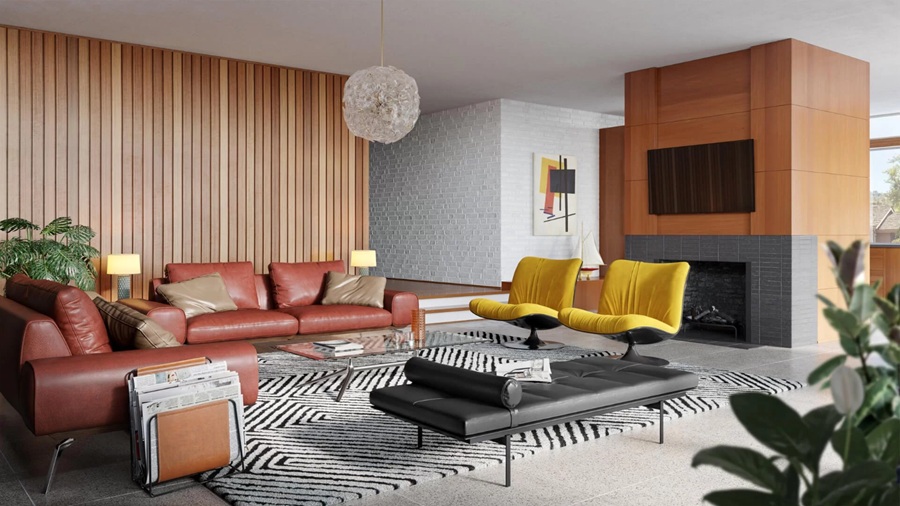
Specialized 3D rendering services for interior design now allow developers to commission multiple versions of the same space — a living room rendered in morning light, then again at dusk, then in an entertainment configuration with the shades drawn and accent lighting on. The automation isn’t described. It’s demonstrated. And the difference in how buyers respond to that, according to developers who have made the switch, is significant.
“You’re not asking someone to imagine what responsive lighting feels like,” says one residential developer who has used CGI-led campaigns for two smart home projects in the past three years. “You’re showing them their dining room on a Tuesday evening when they’ve got people over. That’s a completely different sales conversation.”
The practical upside extends beyond sales. Renders produced before construction can surface integration conflicts that would otherwise only become apparent on-site — a control panel positioned where it interrupts a feature wall, a lighting strip that doesn’t work with the ceiling profile, a vent placement that the interior designer didn’t sign off on. Finding those problems digitally is considerably less expensive than finding them in a finished room.
Style First, Technology Second
One of the more persistent misconceptions about smart homes — one that CGI is particularly well positioned to counter — is that automation implies a certain look. The assumption that a connected home is also a cold, minimalist, tech-forward home has cost more than a few developers sales to buyers who wanted the functionality but not the aesthetic that supposedly comes with it.
In practice, smart systems are largely indifferent to what surrounds them. Concealed speakers work in Victorian cornicing as readily as in a poured-concrete ceiling. Adaptive lighting is as effective in a warm, transitional interior as in a Scandinavian-influenced one. Climate automation doesn’t require stainless steel to function.
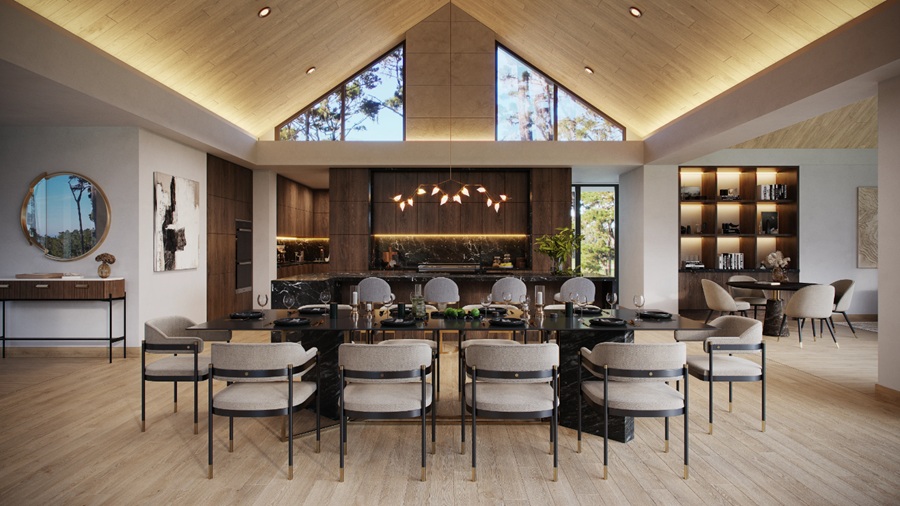
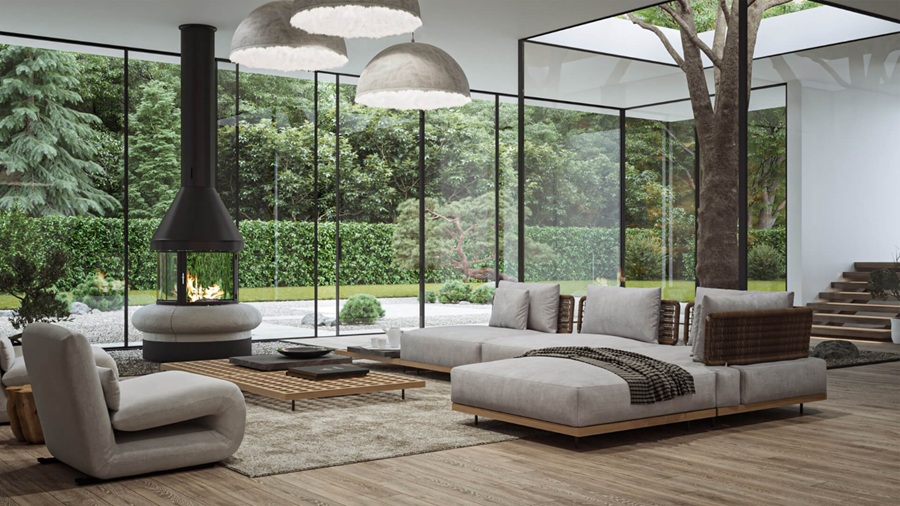
CGI makes that argument visually. Rendering the same intelligent systems across different interior design styles — contemporary, transitional, classic — lets developers speak directly to different buyer profiles without building multiple show suites. A warm, material-rich kitchen with hidden automation reads entirely differently from a monochrome, high-gloss version of the same floorplan, even if the underlying technology is identical. Buyers who would have self-selected out of the “smart home” category based on aesthetic assumptions see themselves in the space — and the conversation shifts.
“We were targeting three very different buyer profiles on one development,” says a marketing director at a mid-size residential firm. “CGI lets us present the same product in three completely different aesthetic registers. We didn’t have to pick one and hope it landed.”
The Pre-Sales Case
For developers selling off-plan — which describes the majority of smart home projects, given that the technology is specified long before the build is complete — the economics of CGI versus a physical show suite are not particularly close. A fully dressed show suite for a smart home project, complete with functioning systems, runs into significant cost. It’s fixed to a single configuration. And it requires ongoing maintenance as the technology evolves.
A CGI-led campaign, by contrast, can be updated as specifications change. New finish options can be added without restaging a physical space. If the developer switches automation platforms mid-project — not unusual given how quickly the smart home sector moves — the renders can reflect that without anyone picking up a paintbrush.
The flexibility also extends to investor presentations. Institutional and private investors evaluating a smart home development want to understand positioning and premium justification, not just floorplans. Renders that show the product in multiple configurations and across multiple price-point finishes communicate market range in a way that technical specifications sheets simply do not.
What the Buyer Actually Needs to See
The smarter developers using CGI for smart home marketing have moved beyond the single hero render — the one polished image that ends up on the project website and in the brochure. The more useful approach, and the one that actually closes sales, is a sequence: the same room across multiple scenarios, demonstrating what the automation actually changes.
Morning light through programmable shades. Task lighting over a kitchen island. A bedroom in full blackout mode. A terrace lit for an evening gathering. These are not aspirational lifestyle images in the traditional real estate marketing sense — they are functional demonstrations of what the buyer is paying for. The render earns its keep not by making the space look beautiful, though it does that too, but by making the technology legible.
That distinction matters more in this category than in conventional residential. A standard apartment buyer responds to staging — the right furniture, the right light, the right angle. A smart home buyer is making a different kind of decision, one that involves trusting that the systems will perform as described. CGI, when it’s done well, provides that evidence before a single wall goes up.
The technology, as it turns out, is not the hard part. The hard part has always been showing people what it will feel like to live inside it. CGI has become the most reliable way the industry has found to do that.