

Why Canadian employers are quietly rethinking the pet bereavement question
Pet bereavement leave is moving from a curiosity into something Canadian HR teams are actively considering
CONSIDER A FAMILIAR scenario for any HR team in Southwestern Ontario. A long-serving production manager shows up to work for a full week looking like he has not slept. There are two missed stand-ups. He gives short answers to questions that do not deserve them, and leaves early twice. The HR team is bracing for a burnout conversation when the manager finally explains: his family’s dog has been missing for nine days, and his wife has been searching the neighbourhood every night.
The story is unremarkable in one sense. Most managers can produce a version of it. What is changing is what happens next.
For most of the last decade, the question of whether an employee’s pet should warrant any kind of formal workplace recognition was treated as something close to taboo. Bereavement policies covered close human family, and that was the end of the conversation. The shift since 2023, particularly among larger Canadian employers, has been gradual but real. Pet bereavement leave is moving from a curiosity in the U.S. tech sector into something that several Canadian HR teams are actively considering.
The more interesting part, for business leaders, is the calculation underneath the policy.
The hidden productivity cost
Canada’s mental-health crisis is now estimated to cost the economy roughly $180 billion a year, with employers shouldering most of the burden through absenteeism, presenteeism, turnover and benefits utilisation. London Inc. covered the scale of that figure earlier this month, and the underlying breakdown matters. The most expensive piece is the steady, day-by-day drag of people who are working while distracted, anxious, or grieving.
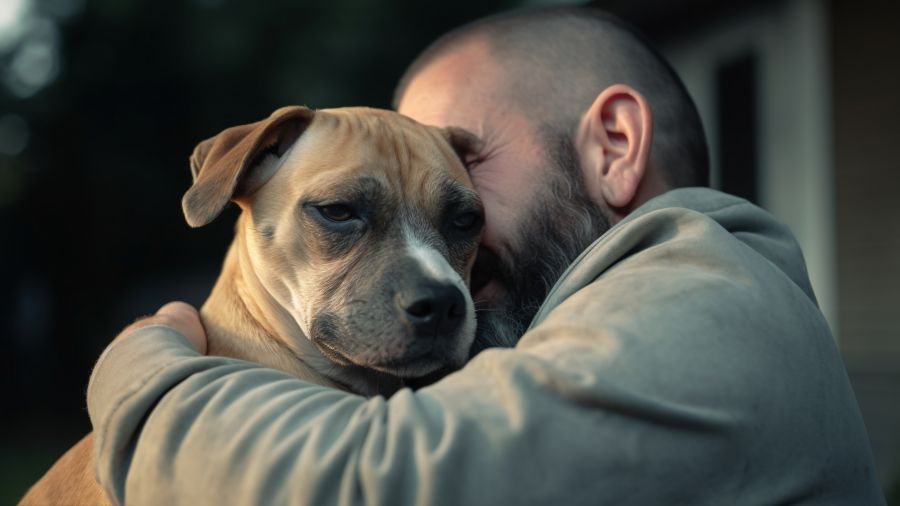
A missing pet sits squarely in that category. Studies on attachment psychology have consistently shown that, for many owners, the bond with a pet activates the same neural systems as primary family relationships. When the pet is suddenly missing, the body reacts the way it does to any acute loss: cortisol rises, sleep fragments, concentration narrows down to a single point. The owner is technically at their desk and technically responsive, but the work is not really happening.
Most managers have seen this and intuited it. The difference now is that the productivity loss is measurable. HR teams that have tracked self-reported focus and output during pet-loss events typically find a meaningful drop that lasts somewhere between three and ten days, depending on whether the situation resolves with a recovery, a confirmed loss, or an unresolved disappearance. The unresolved cases tend to be the longest and most disruptive, because the ambiguity itself drives the stress.
That is the part the business case turns on. A day of paid bereavement leave is straightforward to budget. Two weeks of a senior employee operating at fifty percent capacity is not, and rarely shows up cleanly on any line.
What Canadian employers are doing
The current Canadian landscape on pet bereavement is a patchwork. Most policies are informal. A manager has the discretion to grant a day, or to be flexible with sick time, but there is no documented benefit.
A smaller but growing group of employers, particularly in technology, professional services, and forward-leaning manufacturing, has formalised a one-to-three-day allowance for pet loss. The most generous policy in this space, introduced by the multinational pet-food company Mars, runs to ten days. That is unlikely to be a Canadian standard any time soon, but it has reframed what is considered reasonable. When the largest pet-related employer in the world treats the question as legitimate, smaller firms find it easier to do the same.
The third group, and the largest in Canada, is the firms that have not yet had the conversation. For those leaders, the practical question is what a useful policy looks like, given the realities of small to mid-sized Canadian operations.

What a workable policy looks like
A few principles, drawn from the firms that have done this well:
Keep it simple. The cleanest policies are one or two paragraphs and treat pet loss as a sub-category of compassionate leave, with a defined cap (commonly one or two days) and no documentation requirement. The administrative cost of a stricter framework usually exceeds the cost of the leave itself.
Cover both confirmed loss and active search. The cases that drag on productivity the most are the missing-pet situations that persist for days. Confirmed deaths are usually quicker to absorb. A policy that only triggers on a death certificate misses the place where the productivity hit is actually concentrated. Most firms with good policies allow flexibility for an employee in the middle of an active search.
Make it species-inclusive. Some early policies were written with dogs in mind. Cats, rabbits, parrots, and the rest of the spectrum of household animals all produce the same attachment patterns and the same grief. The policy should not require an HR officer to evaluate whether a guinea pig counts.
Pair it with practical signposting. The biggest non-obvious benefit a workplace can offer in a missing-pet situation is awareness of what to actually do with the day, because most owners have never been through this before and improvise badly under stress.
The infrastructure outside the workplace
That last point matters more than it sounds, because the infrastructure for Canadian pet recovery has changed substantially in the last few years. A missing pet in 2026 is recoverable in a way that was not the case ten years ago, and the difference comes down to networks rather than individuals.
The shift is visible in the platforms that have emerged to handle the practical side. Lost.ca, for instance, has built a community-driven Canadian network that covers more than 180 cities and lets neighbours post sightings without an account, with the goal of compressing the time between disappearance and reunion. The mechanism is unglamorous. Photos go up quickly, dog walkers and joggers spot pets they would otherwise have walked past, and a microchip number gets matched at a vet clinic. Most reunions happen within the first seventy-two hours when the system works.
The reason this matters for an HR team is straightforward. An employee with a clear plan and a working platform spends less time in the spiral of anxious, ineffective searching, and more time getting their pet back. A two-line internal document that points employees at the right resources before they need them is more valuable than a four-page bereavement policy that lands after the crisis is already underway.

A bigger signal
The pet bereavement question is, on its own, a small policy decision. What it tends to indicate, when a firm gets it right, is something larger about how the organisation thinks about its people. Companies that treat the question as legitimate are generally companies that have also gotten the harder questions right around mental-health support, flexibility around personal crises, and the implicit messages a workplace sends about what is and is not allowed to matter.
Pet bereavement scores well in employee surveys, but its real function is to demonstrate that the firm understands what acute personal stress does to performance and plans around it instead of punishing it.
For Canadian employers still working through this question, the underlying point is simple. The productivity hit from an employee in the middle of a missing-pet crisis is real and measurable. A small policy that acknowledges this, paired with awareness of the practical resources available outside the workplace, costs almost nothing and pays back in a kind of reliability that does not show up neatly in a balance sheet but is felt by everyone in the room.