
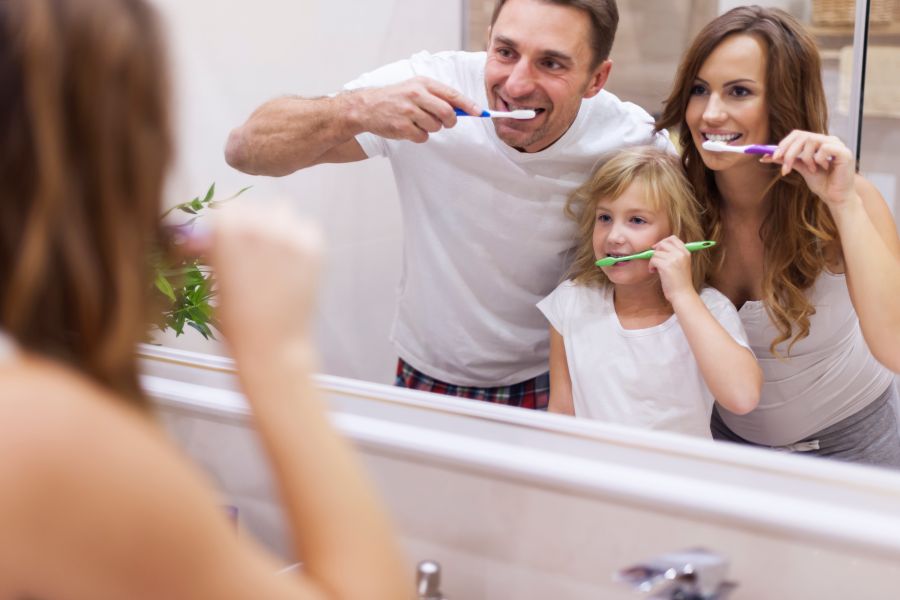
The daily habits that protect your family’s teeth
Taking steps to develop daily family dental habits delivers a big return on the investment
MOST PEOPLE ASSUME dental health comes down to genetics or luck. It does not. What decides whether a family spends its weekends in a waiting room is a handful of unremarkable habits repeated without much thought. None of them are difficult. The hard part is doing them on the nights when everyone is tired, running late, and negotiating over screen time.
Keeping care under one roof
Families often split their dental care across separate places, sending the children to one clinic, the adults to another, and whoever cracks a tooth on a Saturday to whichever office answers the phone. That scattering leaves no single record of what has already been treated, which means repeat examinations, contradictory advice, and delays at exactly the moment speed matters most. The Dental Team keeps all of it in one practice, covering cleanings, fillings, children’s dentistry, orthodontic treatment, night guards, and same-day emergency care, so a family’s full history sits in one file rather than four. Its offices run extended evening and Saturday hours with free parking, which removes the usual conflict between an appointment and a workday.
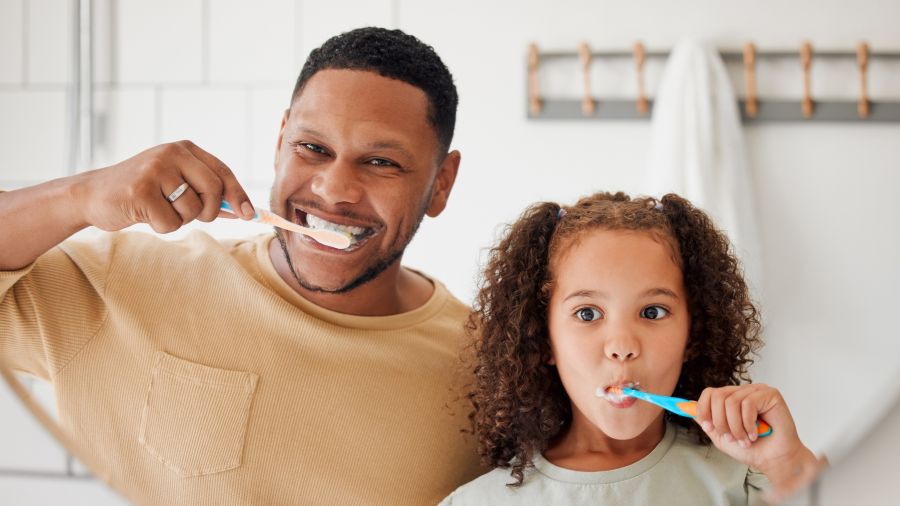
Why two minutes matters
Most of us think we brush for two minutes. Timed honestly, the average lands closer to forty-five seconds. That gap is where plaque survives, particularly along the gumline and across the back molars, where a rushed brush never quite reaches.
Fixing it takes almost nothing. An electric brush with a built-in timer removes the guesswork. So does one song played start to finish, which turns a chore into something with a clear finish line. Fluoride toothpaste does the actual chemical work of hardening enamel, so that part is not optional.
Flossing gets skipped more than any other step, usually because it feels fussy. Picks solve that for most people. A cheaper trick is to floss before brushing rather than after, since it stops being the last obstacle between you and bed.
What ends up in the glass
Sugar gets blamed for cavities, but frequency does more damage than quantity. A chocolate bar eaten in five minutes causes one acid attack. The same sugar sipped through a juice box over three hours causes a dozen, and enamel never gets a window to recover in between.
That reframes the whole conversation at home. Dessert after dinner is not the problem. The travel mug of sweetened coffee nursed all morning is. So is the sports drink living in a backpack, and the water bottle refilled with anything other than water.
None of this requires banning treats, which never works anyway. Group sugary things with meals, when saliva flow is already high and doing its job. In between, let water be the default. It rinses acid away and costs nothing.

Reading the quiet signals
Teeth rarely go from fine to urgent overnight. They send signals first, and most of those signals are easy to talk yourself out of. Gums that bleed during brushing are not normal, even though almost everyone treats them as normal. Cold drinks that produce a sharp jolt, breath that stays bad after brushing, or a dull ache when chewing on one side all belong in the same category.
Children rarely describe any of this accurately. What you will see instead is behavioural. A child chews only on one side. A child who ate anything now refuses cold food. Sleep turns patchy for no obvious reason, and the mornings get irritable.
The useful question is not whether a symptom is severe but whether it keeps returning. A single sensitive afternoon means little. The same sensitivity every day for a fortnight means something is progressing, and progressing problems cost more the longer they run.
Taking the fear out
Children absorb dread from adults far more than from the experience itself. A parent who announces that nothing will hurt has just introduced the possibility that something might. Neutral language works better than reassurance.
Describe it plainly. Someone counts the teeth, checks how they are growing, and cleans them. That is the whole event. Rehearsing at home helps more than any speech, so let a child open wide while you count with a mirror, then swap roles and let them count yours.
Afterward, keep the praise proportionate. Loud celebration signals that something frightening has been survived. A calm remark that it went well leaves the child with the impression it was routine, which is exactly the impression you want for the next time.

Making it survive a busy week
Routines fail when they depend on remembering. They hold when they attach to something that already happens automatically. Brushing after breakfast survives because breakfast survives. Flossing survives when the picks sit on the counter rather than inside a drawer.
The same principle applies to the calendar. Setting the next date before you walk out the door removes the decision entirely, and decisions are what get postponed. Left to memory, six months slide into eighteen, and by then whatever was small has had a year to grow.
Nothing here demands much. Two honest minutes twice a day, water between meals, and enough attention to notice when something changes. Do that consistently and most dental problems never get large enough to interrupt anything. That is the whole return on the investment, and it is a good one.