
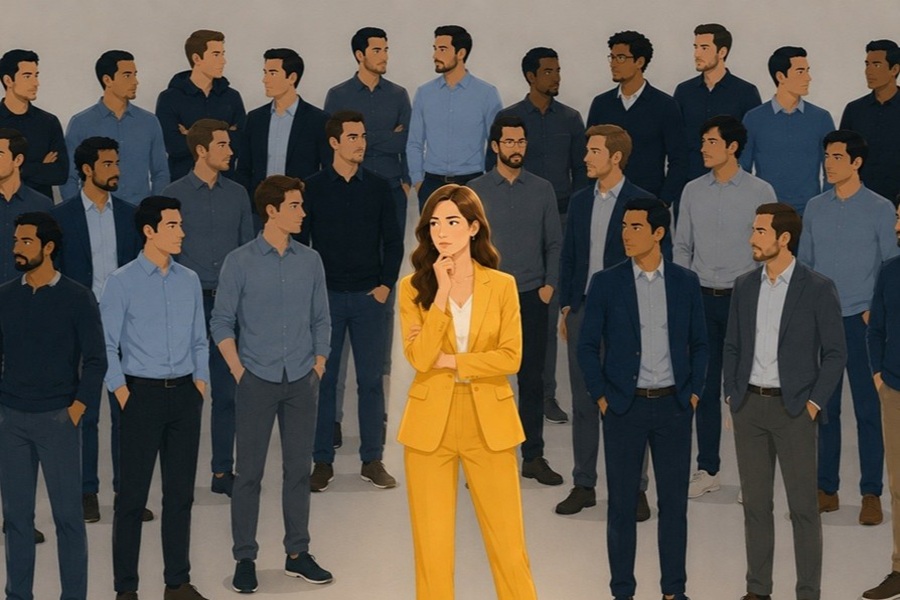
The AI boom Is here, but where are the women?
AI is creating some of the fastest-growing and highest-paying opportunities in today’s labour market — but women are being left behind
AI JOBS ARE booming, but they aren’t going to many women, a new LinkedIn research report finds.
Click here to view this article in the London Inc. Worklife newsletter
“AI is creating some of the fastest-growing and highest-paying opportunities in today’s labour market,” the report starts out, noting that AI job postings have doubled in the past three years, often with high salaries attached. “But women are far less likely to be hired into these opportunities. They accounted for just 26 per cent of AI hires in 2025, compared with 50 per cent of hires into non-AI occupations.”
And the higher up the corporate org chart you go, the more pronounced this becomes: only 13 per cent of C-suite AI positions are filled by women, the research finds. Conversely, the lower you go towards entry-level AI jobs like data annotation roles, the more gender equal things look.
What gives? Part of what we’re likely seeing here is the downstream effect of what researchers have dubbed the AI Gender Gap, a broad phenomenon that has seen women be both less enthused about AI and less quick to adopt it in their work than their male counterparts.
“The data confirms what our eyes have been telling us all along. Most of the public faces of the AI buildout have been men” —Emily Peck
“Women face structural headwinds around AI use,” a study from earlier in the year by Lean In found. “They get less recognition for using AI, less manager support and are more likely to fear it will cost them their jobs.” The report then warned that “small gaps in usage today could become large gaps in opportunity tomorrow” — something the LinkedIn research would seem to confirm.
“AI is creating some of the fastest-growing, highest-paying, most consequential jobs in the global economy, but women are strikingly underrepresented in terms of who is getting hired, who benefits from the pay premium and who is leading the development and deployment of this tech,” said LinkedIn spokesperson Sarah Steinberg, speaking to CBS News.

An Axios report on the finding added some helpful context, which is that while AI dominates the discourse around jobs and the economy, actual AI jobs are “just a small sliver of the labour market,” so the imbalance is, for now, at least somewhat contained.
But they also noted this is nothing new for the tech industry, which has perpetually had a problem recruiting and keeping female staff (for, let’s just call it, a mosaic of reasons).
The rates may change over time, but if there’s a takeaway to be had right now, it’s that you’re not imagining things: AI really is dude heavy.
“The data confirms what our eyes have been telling us all along,” wrote Emily Peck at Axios. “Most of the public faces of the AI buildout have been men.”  Kieran Delamont